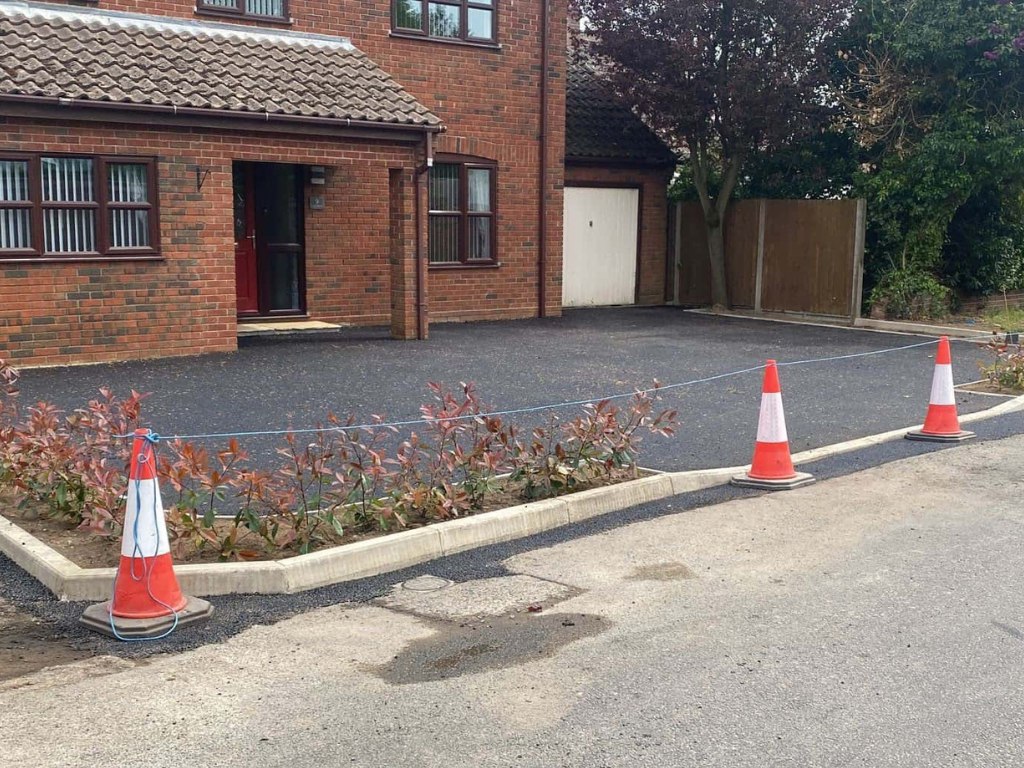
What Makes Resin Bound a Popular Choice for Driveways, Paths and Patios?
Resin bound surfacing has become a popular option for residential driveways, garden paths and patios because it combines a smooth finish with practical everyday performance. Natural aggregate is mixed thoroughly with clear resin before being hand-trowelled onto a prepared base, creating a continuous surface in which the stones are securely held together.
For homeowners in Sittingbourne, Kent, resin bound surfacing can help connect different outdoor areas with one consistent finish. Its success, however, depends on choosing suitable materials, preparing the foundation correctly and installing the surface under appropriate conditions.
Why Resin Bound Surfacing Works Across Different Outdoor Areas
A resin bound surface can be adapted to suit vehicle access, pedestrian routes and outdoor seating spaces. This versatility allows the driveway, paths and patio to complement one another without every area needing a completely different material.
A Smooth and Consistent Finish
Because the aggregate is mixed with resin before installation, the finished surface is even and largely free from loose stones. It can provide stable footing for pedestrians while allowing garden furniture, bicycles, bins and wheeled equipment to move more easily.
The hand-trowelled application also helps create neat transitions around:
- Doorways and entrances
- Steps and ramps
- Curved paths
- Drainage features
- Existing walls
- Planting areas
- Decorative borders
Careful installation is essential to maintain consistent depth and compaction across the entire area.
Suitable for Driveways
A professionally installed resin bound driveway can support regular domestic vehicle use when laid over a stable, suitable base. The full construction must distribute vehicle loads without allowing movement beneath the resin surface.
Particular attention should be given to entrances, turning points and frequently used parking positions. These areas experience greater pressure from braking and steering, so the base, edging and resin depth must all be appropriate for the intended use.
Resin should not be treated as a solution for a weak foundation. Cracks, sinking or movement in the base can eventually affect the new surface above.
Practical for Garden Paths
Resin bound surfacing can create clear, comfortable routes between entrances, patios, lawns and other parts of the garden. Its seamless appearance is especially useful for curved or irregularly shaped paths.
The absence of loose gravel can make paths easier to maintain and reduce the amount of stone carried onto adjoining surfaces. A properly planned path should still have suitable levels, edge restraint and drainage from one end to the other.
A Useful Surface for Patios
On a patio, resin bound surfacing provides a level base for tables, chairs and other outdoor furniture. It can cover broad seating areas while accommodating curves, borders and changes in shape.
The surface should be designed around how the patio will actually be used. Furniture dimensions, walking routes, door access and connections with the garden all need to be considered before installation. A visually appealing patio may still feel cramped if its layout does not provide enough usable space.
Permeability Can Support Surface Drainage
The small voids between the resin-coated stones allow water to pass through the finished surface. When the complete construction beneath it is also suitable for drainage, this permeability can reduce surface water and minimise puddling.
The surface layer alone does not guarantee effective drainage. Water must have somewhere to go once it passes through the resin. The base, sub-base, ground conditions and surrounding levels must therefore be assessed as part of the complete design.
Incorrect falls or a non-draining foundation can still cause water-related problems.
A Choice of Aggregate Finishes
Resin bound surfaces are available in different aggregate sizes, blends and tones. This allows the finish to be selected around the property’s exterior, garden design and adjoining materials.
Contrasting aggregates can also be used to define:
- Driveway edges
- Parking areas
- Path routes
- Patio sections
- Steps and entrances
- Decorative features
The aggregate must be compatible with the resin and suitable for the intended traffic. Appearance should be considered alongside texture, strength and ease of maintenance.
Clear Edges and Defined Shapes
Secure edge restraints help contain the resin during installation and protect the perimeter once the surface is in use. They also provide a neat transition to lawns, flower beds and other paved areas.
Resin bound surfacing can follow straight lines, sweeping curves and more detailed layouts. Accurate setting out is important because irregular widths or poorly planned junctions can make paths and patios less practical.
Straightforward Routine Maintenance
Resin bound surfaces are relatively easy to look after when they are maintained regularly. Sweeping removes leaves and debris, while appropriate washing can reduce the build-up of dirt and organic growth.
Useful maintenance includes:
- Keeping the surface free from leaves
- Clearing nearby drainage points
- Removing weeds growing from adjoining ground
- Cleaning spillages promptly
- Monitoring edges and high-use areas
- Avoiding sharp objects that may damage the surface
Any localised damage should be assessed before water or movement affects the surrounding material.
Resin Bound Is Different From Resin Bonded
The two terms are sometimes confused. With resin bound surfacing, aggregate and resin are mixed before application, producing a smooth, permeable finish. Resin bonded surfacing is created by spreading aggregate onto a resin-coated base, resulting in a rougher texture with some loose stone.
Understanding this distinction is important when selecting a surface for a driveway, path or patio. The installation method affects its appearance, texture, drainage characteristics and intended use.
Preparation Determines Long-Term Performance
The finished resin layer is only part of the installation. A professional assessment should consider:
- The stability of the existing ground
- The condition and suitability of any current base
- Expected vehicle and pedestrian use
- Drainage requirements
- Finished levels and falls
- Edge restraints
- Cracks or movement in existing surfaces
- Access for installation
The base must be clean, sound and correctly prepared. Any weakness beneath the resin may be reflected through the finished surface later.
Installation Conditions Matter
Resin must be measured, mixed and applied carefully. Temperature, surface moisture and weather conditions can affect working time and curing.
Consistent mixing ensures that the aggregate is coated evenly, while skilled trowelling produces the correct depth and finish. Joins between batches must also be managed properly so that the completed surface performs as one continuous area.
Conclusion
Resin bound surfacing is popular for driveways, paths and patios because it offers a smooth finish, limited loose stone, flexible design options and useful permeability when installed over the correct base. Its versatility can also create a consistent appearance across several outdoor areas.
Sittingbourne Driveways provides professional resin bound surfacing in Sittingbourne, Kent. If you are considering a new driveway, path or patio, contact our team to arrange a site assessment and discuss whether resin bound surfacing is suitable for your property.
Call us on: 01795 905 087
Click here to find out more about Sittingbourne Driveways
Click here to complete our contact form and see how we can help with your driveways.